Mediterranean Garden Society
Mediterranean Garden Society
University of California Botanical Garden: The First Hundred Years
by Ramona Davis & Katherine Greenberg
Photographs courtesy of The University of California Botanical Garden at Berkeley
Photographs to illustrate the article published in The Mediterranean Garden No. 124, April 2026
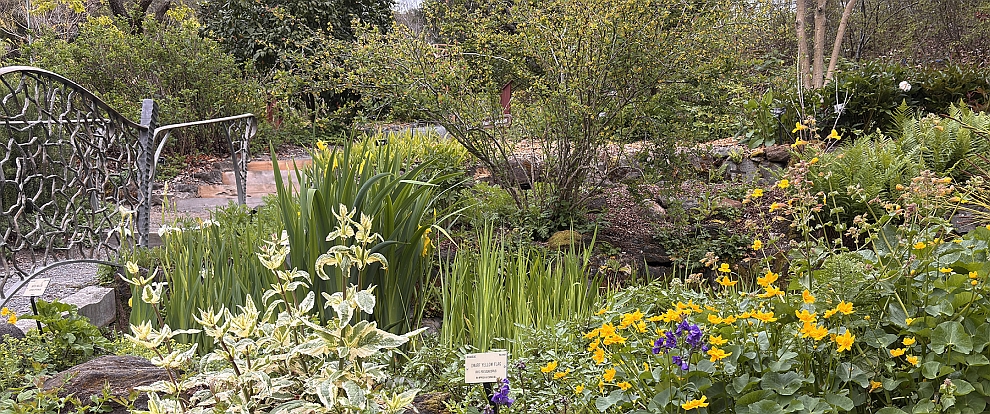
The photo at the top of this page shows the Herb Garden and Bridge at UCBG
The University of California Botanical Garden at Berkeley is a living museum that features one of the world’s most diverse plant collections, with more than 10,000 plants. Over 80% of the plants are of wild origin, including many rare and endangered species, collected with documentation that provides opportunities for conservation, research and education. Promoting public understanding and appreciation of plants and the natural environment is an important mission of the Garden.
The Garden was originally founded on the UC Berkeley campus in 1890 by E.L. Greene, the University’s first Chairman of the Department of Botany. Under his leadership, a living collection of the native trees, shrubs and herbaceous plants of California was established, with the intention of expanding the collections to include plants from other regions. With a mediterranean climate and varied topography, California has the most diverse flora in North America. In 1894, a conservatory modelled after the Conservatory of Flowers in San Francisco was built to house tropical plants.
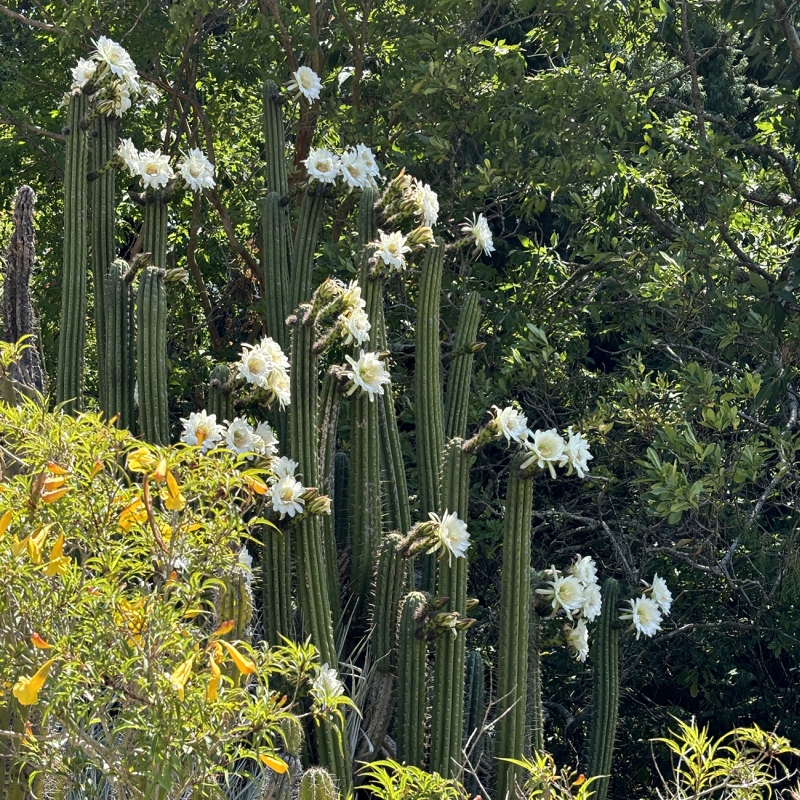
San Pedro macho (Echinopsis peruviana) at UCBG
As the campus was expanding in the mid-1920s, the Garden was relocated to the current 34-acre site on Centennial Drive above the main campus in Strawberry Canyon. Thomas Goodspeed, the Garden’s curator, described the site as having ‘the eastward moving air draft from the Golden Gate, with consequent moderating influences on summer temperature and humidity that permit an association of plants, birds and mammals not duplicated elsewhere in middle western California’. The Bay Area’s summer-dry climate and mild winters were uniquely suited to growing plants from many parts of the world.
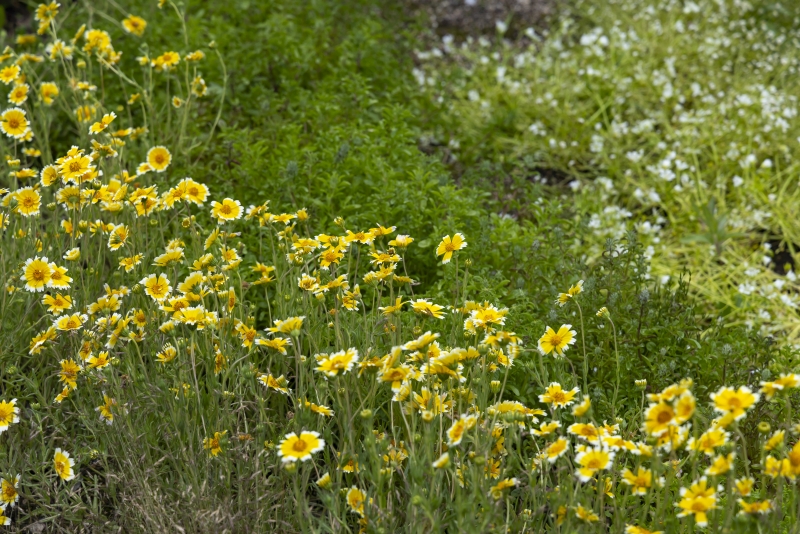
Fremont Tidy-Tips (Layia fremontii) at the UCBG Vernal Pool (Saxon Holt)
In collaboration with J.W. Gregg, a professor in the Department of Landscape Architecture, Goodspeed decided to group plants by geographic region of origin. Before planting, much of the initial clearing and construction of roads and paths was done by Civilian Conservation Corps crews. The largest section of the Garden was devoted to native plants of California, a small rock garden with cacti became the Deserts of Americas section, and a grove of redwood trees (Sequoia sempervirens)was established. Other areas were designated for plants from Asia, Australasia, South America, Southern Africa, Mexico and Central America, and Eastern North America.
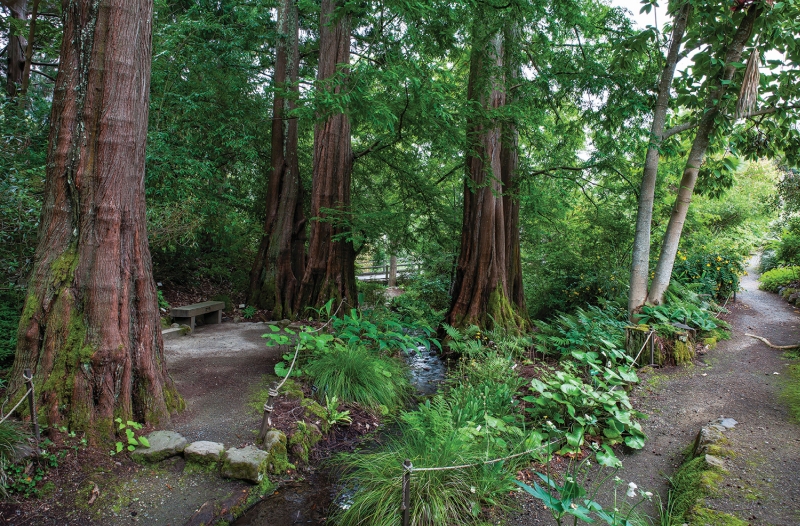
Dawn redwoods at UCBG (Saxon Holt)
In 1934 Goodspeed was appointed Director, a position he held until 1957. During his long tenure, Goodspeed oversaw plant collecting expeditions to South America, Africa and Asia. Seeds of the dawn redwood (Metasequoia glyptostroboides) were collected in a remote valley of China in the 1940s. Prior to its discovery, botanists knew of this ancient species, a deciduous conifer, only from the fossil record.
At the end of the Second World War, the government of Japan donated boulders and stone lanterns to the Garden from the Japanese Pavilion designed for the 1939 World’s Fair in San Francisco. These features were installed around a Japanese Pool in the Garden’s Asian section, and the pond soon attracted a population of newts. Nearby, there is a lovely bamboo grove.
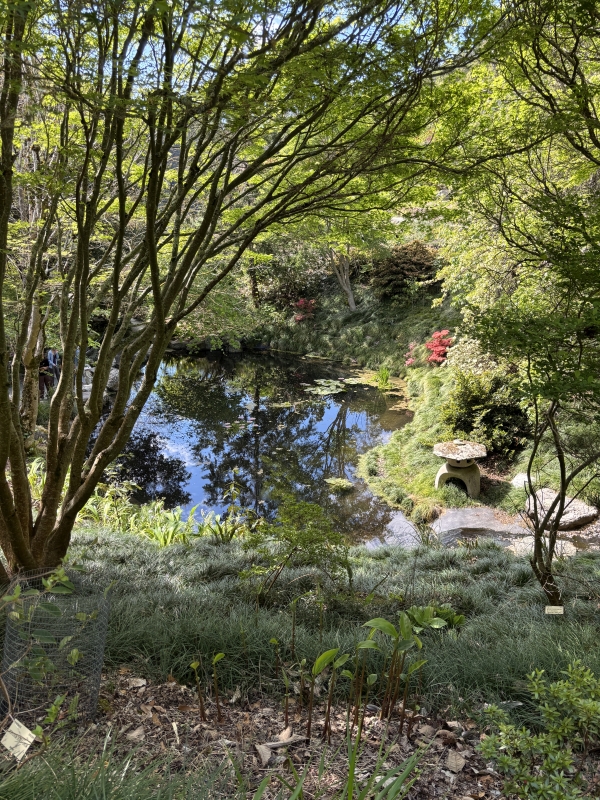
Japanese pool in early spring
Initially the Garden was open only to professors and students for research and classes. The University decided to open the Garden to the public in the years before Robert Ornduff became Director in 1974. A UC Berkeley professor of botany, Ornduff initiated the docent programme and guided tours for visitors. He was particularly interested in plants of the world’s mediterranean-climate regions, and he increased the Garden’s plant collections from California, Chile, South Africa, Australia and Asia.
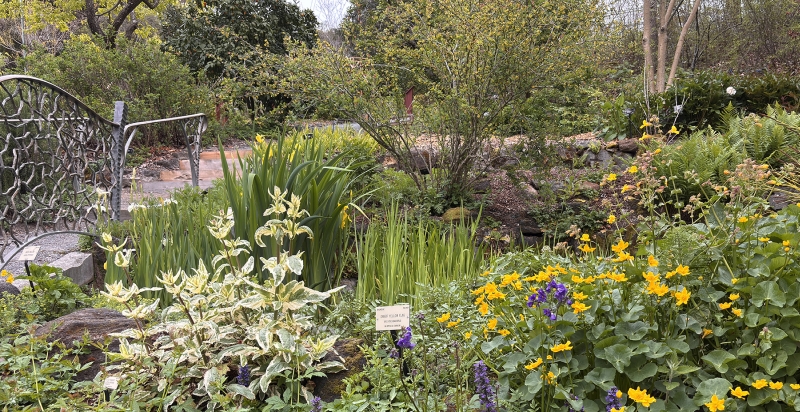
Herb garden and bridge
In addition to wild-collected plants, the Garden established ethnobotanical collections of herbs, Chinese medicinal herbs, crops of the world and heritage roses. Glasshouses were built to display arid plants, orchids, carnivorous plants, and plants from tropical regions that require special environmental conditions. Four collections of significant genetic diversity have been nationally recognised: cycads, ferns, magnolias and oaks.
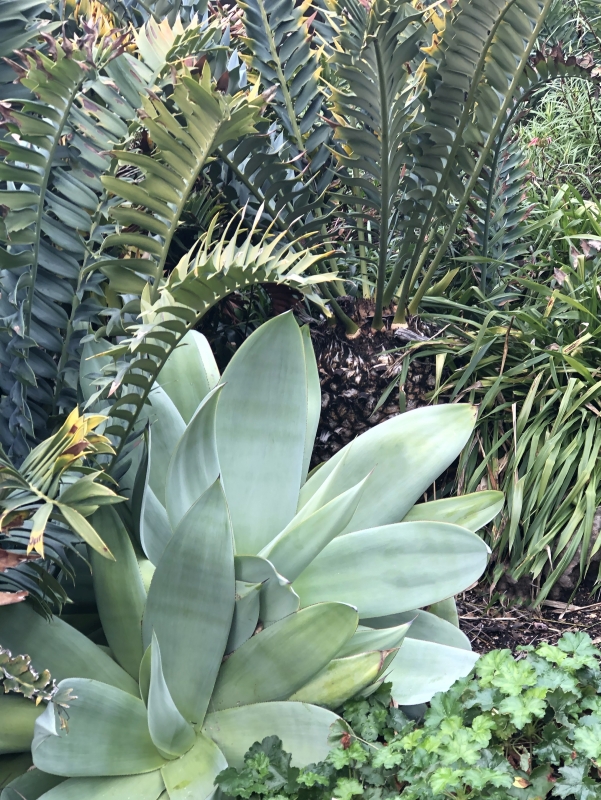
Waterwise plants at UCBG
In 2003, Paul Licht became Director, after teaching and serving as UC Berkeley’s Dean of Letters and Science. Licht’s initial focus was improving the Garden’s infrastructure and fundraising for special projects, including a new Water Wise Entry Garden. He was also instrumental in acquiring a historic building designed by Julia Morgan in 1911 as a hall for women students, when the structure needed to be moved from its original location on the main campus. Constructed of old growth redwood, the building overlooks the California section and fits seamlessly into its new location.
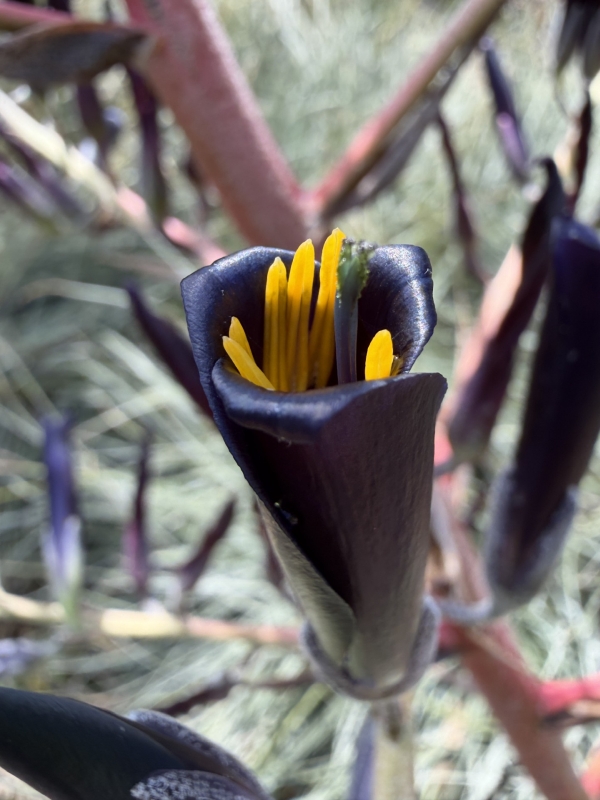
Puya coerulea var. intermedia native to Chilep
Lew Feldman, a UC Berkeley professor and research botanist, followed Licht as Director in 2019. During the Covid pandemic, the Garden remained open for visits while the rest of the campus was closed. Feldman prioritised upgrades for the Garden’s research facilities and a redesign of the Tropical House. Under Feldman’s leadership, the Garden has continued its involvement with the national Plant Rescue Center, the Plant Collection Network, and the Center for Plant Conservation.
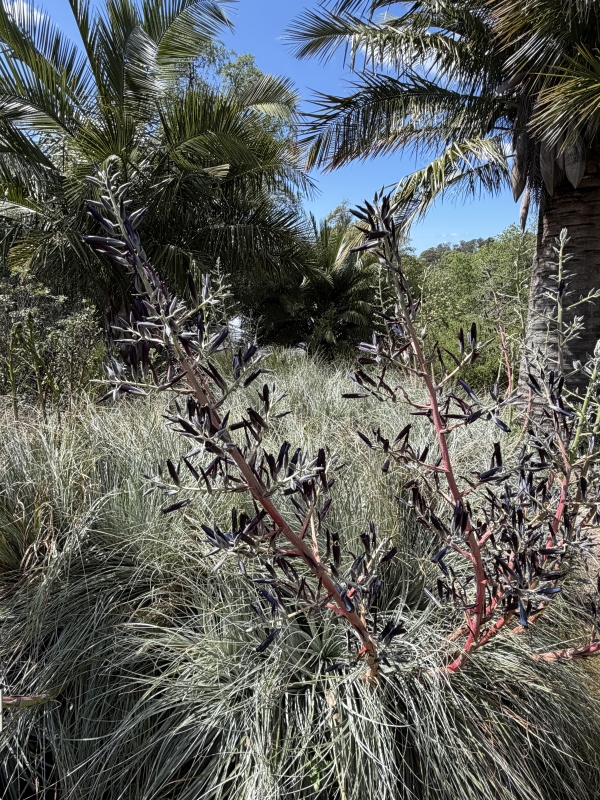
Puya coerulea var. intermedia at UCBG
Andrew Doran, Director of Collections, has participated in plant collecting expeditions, while managing the Garden’s horticultural and curatorial staff, updating the Garden’s plant database, and working closely with the University and Jepson Herbaria to maintain voucher specimens of the plant collections. Doran and Feldman have facilitated research projects ranging from genetic analyses of plants to studies of plant physiology, while continuing conservation efforts and collecting seeds of endangered species.
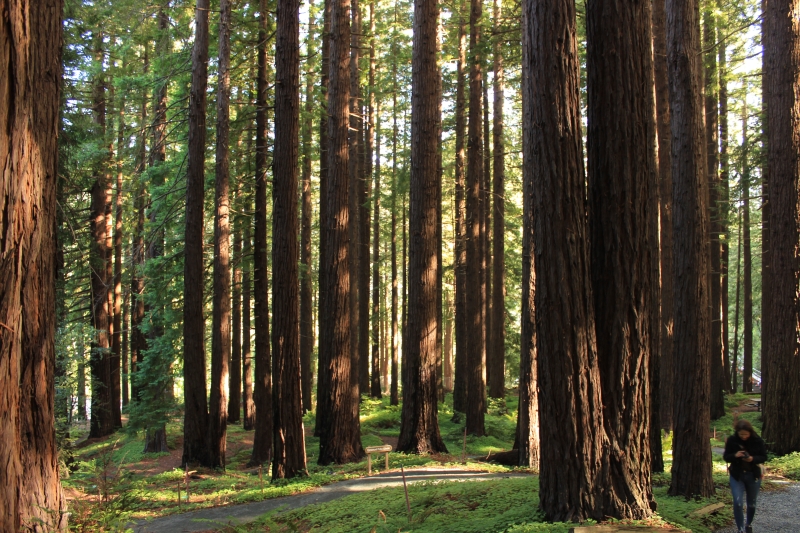
Redwood grove in sunlight
Visitors of all ages enjoy bird-watching tours in the Garden, summer concerts in the Mather Redwood Grove, and views of the Golden Gate Bridge from the Garden of Old Roses. Docents develop special tours for children from local schools to learn about plants and nature. There are also in-person and virtual programmes throughout the year. A group of local botanical artists is currently working on a florilegium of illustrations that depict iconic plants from the Garden’s collections.
One can only imagine what the Garden’s plant collections represent for future learning, research, conservation and other possibilities. The University of California Botanical Garden at Berkeley is looking forward to the next hundred years, as it celebrates one hundred years on Centennial Drive.
THE MEDITERRANEAN GARDEN is the registered trademark of The Mediterranean Garden Society in the European Union, Australia, and the United States of America
website designed and maintained
by Hereford Web Design