
Mediterranean Garden Society
Mediterranean Garden Society

Attic Treasures
by Martin Wilkie
photographs by Martin Wilkie unless stated otherwise
The photo at the top of this page shows the natural flora of the mid-upper slopes of Mt. Hymettus near Sparoza, illustrating the tough and challenging landscapes of the high mountain slopes of the area (photo in the public domain)
First published in the 2022 Journal Vol. 17 of the Rhododendron Species Botanical Garden in Seattle this updated article (2026) appears on the MGS website with kind permission of the RSBG.
Introduction
Along with the southern coastline of Western Europe and the north coast of Africa, much of Greece has a quintessentially mediterranean climate, with all the variety, advantages, and disadvantages to be expected from that environment. Attica, or the Attic peninsula, is both a historical region and a (slightly larger) modern administrative district: a broad arrowhead projecting southeast into the Aegean Sea, with the city of Athens midway down its western coast. With a current population of over 3.5 million people, (35 % of the entire country), Athens now covers the whole central plain of Attica, which is itself surrounded on three sides by mountain ranges and overlooks the sea. Mount Hymettus rises to 1,026 m (3,366 ft) east of the city, and further to the northeast beyond the mountain is a smaller basin partly surrounded by hills and facing the sea – the Mesoghia plain.
From the early 1960s, after her retirement, a remarkable Englishwoman, Mary Jaqueline Tyrwhitt (1905 – 1983), ‘Jacky’ as her friends called her, created a home and beautiful garden on a hillside overlooking this plain. Over the next 20 years she and her friends and gardeners developed the garden, called Sparoza, to complement the harsh climate, provide a haven for hundreds of species and varieties of native Greek and exotic plants, and create a place of peace and beauty. The process has continued. Now the headquarters of the Mediterranean Garden Society (MGS), Sparoza “has a quiet but steadily growing reputation in the gardening world, its renown not reflecting grandiosity or expense but rather its philosophy of matching the aesthetic sensitivity of the gardener with the limitations and opportunities offered by the difficult and typically mediterranean conditions of this Attica hillside. It is, in other words, a place where beauty and climate compatibility go hand in hand”.
In 1983 Jacky completed the draft of Making a Garden on a Greek Hillside. It was first published in 1998, and a new expanded edition is expected soon. She saw that there was a lack of information available at the time, and wanted to encourage other gardeners by describing in detail the plants which would grow well in a mediterranean climate and offering practical information about how best to cultivate them. Forty years later there is far more information generally available about mediterranean gardening, which is now increasingly popular as more gardeners, horticulturists and designers are learning to respond to increasing heat, water scarcity, and climate unpredictability.
Jacky’s book is also the story of how she came to live in Greece, her personal experiences of the garden and local community through the seasons, and her affection and concern for the native flora and ancient natural and built landscapes. Her home and garden in Greece were begun while she was fully engaged with a busy international career as a town planner, landscape architect, editor, educator, translator, author, and administrator. As a young woman Jacky trained in horticulture and landscape design, and creating her own home and garden decades later must have given her immense pleasure.
Writing in 1979 she explained: “Fifteen years ago I procured a piece of bare and rocky land, with a view towards the south, on a windswept hill in Attica which was called Sparoza by the locals. The only vegetation which could be seen in summer were a few sheep-nibbled bushes of the mastic tree (Pistacia lentiscus), the kermes oak (Quercus coccifera), and some wild olives. This very same place today has a fair number of large trees which help to act as windbreaks and to preserve the soil from erosion by rainwater; also there is a large variety of native and exotic shrubs, herbs, and bulbs. This was achieved through the planting of trees which were used as a fence and prevented the grazing of sheep, and with a little watering even though that is only possible in a small area around the house because the water supply is limited. In time I learnt, through trial and error, what can flourish under the hard conditions of Sparoza. All summer the earth is baked hard by the sun and raked by the prevailing meltémi wind [from the north], which seems to desiccate the plants more than the burning rays of the sun. In winter the problem is that the temperature often falls suddenly to zero, or below, even though it doesn’t last for long. My conclusion is that every plant that flourishes in Sparoza can almost certainly grow in any other barren area of Greece … The native Greek flora is not only exceptionally rich but is an essential element of the Greek landscape.
The climate presents difficulties but I think my experience, on one of the most unpromising sites, shows that it is perfectly possible to have a garden with a rich variety of native and exotic plants that always has something in full bloom throughout the year.” (Tyrwhitt)

Three quotes may help to give a sense of Jacky’s personality, and the respect and affection in which she was held professionally. In 1985 her colleague Professor Jerzy Soltan from Harvard University, who first met her in 1956 and was later to design her house in Greece, described a woman “who was one of the greatest erudites in the three fields (architecture, landscape architecture, and planning) that I have ever met. I can’t think of anyone who has been able to make a bridge between the three more intelligently. She was extremely articulate, highly cultured, exceedingly well travelled, and she knew absolutely everybody”.
Earl Murphy, president of the World Society for Ekistics (the science and study of human settlement) also noted in 1985 that “she was a magnificent editor who had as great a capacity for friendship as for good work”. And from Ellen Shoshkes in 2006: “Jaqueline Tyrwhitt was a town planner, editor and educator who was at the centre of a group of people who shaped the post‐war Modern Movement. Tyrwhitt’s great contribution [was] especially to the planning arm of the Modern Movement, the new field of urban design and the new science of ekistics…”
Climate Change
Jacky’s practical experience and plantsmanship, her professional expertise in landscape, ecology, planning, and environment, and her concerns about the effects of human activity on the natural world are more relevant than ever. There is a sense of greater urgency today as alarming examples of record climate extremes are appearing more frequently and decades earlier than predicted. Recent fires and heatwaves on Australia’s east coast, in the Pacific Northwest of America and across Greece have been particularly visible examples. Some ecosystems have evolved with naturally occurring fires, including those around the Mediterranean Sea; however they are increasingly experiencing the wrong kinds of fire, in the wrong seasons, and of the wrong intensity.
Jacky would have been shocked and saddened by the wildfires in Greece in 2021, which reached forest parks in Attica and the outer suburbs of Athens and were made more deadly by record temperatures of over 47°C (116°F). There is an awareness of fire and its management in Mediterranean countries: the historic monastery of Kaisariani near Sparoza has a notable forest park and botanic garden, and in 2021 a preamble to their management plan noted that “after the devastating fires of the summer and especially of Evia, the need for wider thinnings and [of] branches of trees became imperative…”; and from Italy when a resident of Cortona in rural Tuscany described in the 1990s how “in these early June days we must clear the terraces of the wild grasses so that when the heat of July strikes and the land dries, we’ll be protected from fire”. (Mayes)
In January 2022, unusually heavy snow fell in Athens, with temperatures down to -14°C (6.8°F) – a dramatic seasonal temperature range between summer and winter of 61°C (109°F). And even back in 2019, an illustrated newspaper article from Melbourne Australia noted that “as in many other places, the weather at Sparoza has been less predictable in recent years. Sally Razelou [then Curator of garden], noted that out-of-season deluges of rain both 2018 and 2019 changed some growth patterns. There was record rainfall in July 2018 (110mm (over 4 inches) when it is usually dry), and also in September and then again in April 2019. While the wet weather prompted particularly spectacular autumn and spring flowerings and caused some plants to unexpectedly bloom that summer, Razelou worried that if Sparoza consistently receives unseasonal rainfalls some species might start to fail”.
Jacky’s Family and Professional Training
Some of this information is summarized from the preface of Making a Garden on a Greek Hillside, written by Sally Razelou (1931 – 2021), guardian and resident at Sparoza in 1998 when the book was published.
The Tyrwhitt family name first appears in records after the Norman Conquest in 1066, leading back to the villages of High and Nether Trewhitt in Northumberland. Jacky was the eldest of four children in an upper-middle-class British family. Her parents Thomas and Dorothy (née Marsden) were in South Africa in 1905 when she was born – her father was an architect – but the family returned to London two years later. “They spent their childhood… paying long visits to their grandmother and great-aunts in the country, all of whom had beautiful gardens. This early exposure to the delights of a garden was to have a permanent effect on Jacky.” (Razelou) After her early schooling she hoped to work for a history scholarship to Oxford University, however her father was wary of undergraduate life and its expenses. Jacky wanted a career, but at that time it was unusual for women of her social class “to pursue careers. Her family encouraged her to take up landscape gardening, and that’s how Jacky got started.”
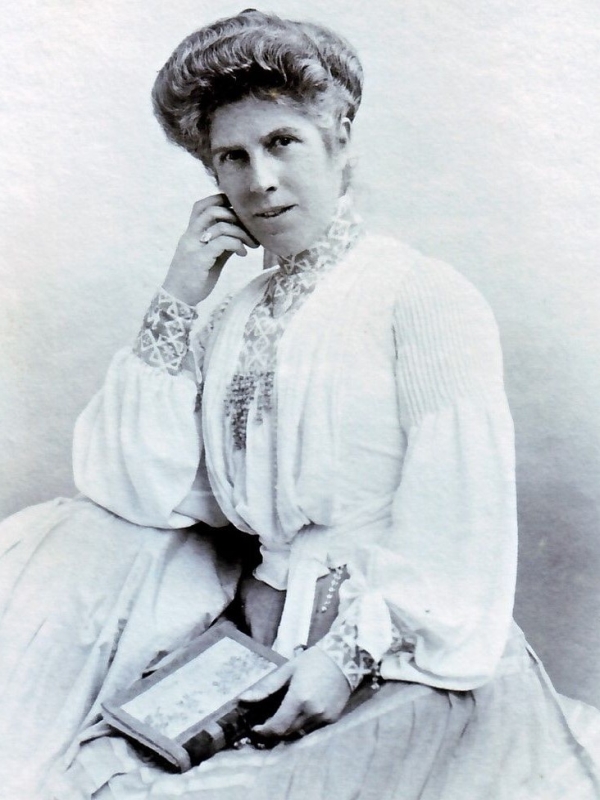
Her first tertiary qualification was a Horticultural Diploma in 1924 from the Royal Horticultural Society. She would have been familiar with her father’s work as an architect, and in 1925 attended the Architectural Association, which brought her into contact with the international architectural world and the ideas of modernists such as Walter Gropius, who founded The Bauhaus school in 1919, and Le Corbusier. In 1925-26 with other student gardeners, she also attended Warley Place in Essex, directed by the famous English plantswoman Miss Ellen Willmott, who was a friend of Jacky’s mother. Practical gardening and exposure to Miss Willmott’s accumulated horticultural knowledge of a lifetime became for Jacky a direct link to growing plants in Greece forty years later.
Interestingly, Miss Willmott also grew a rich collection of mediterranean-compatible plants at one of her overseas estates, Villa Boccanegra near Ventimiglia in Italy from 1905–1923, as we will see.
In 1926 Jacky also took evening classes for a year at the London School of Economics and started full-time paid work designing gardens.
Jacky’s professional life spanning nearly 50 years (until well into the 1970s) can be broadly divided into two parts: in the United Kingdom until 1951, then in North America, with further international commitments via the United Nations and other public and private organisations all over the world, including Singapore, Hawaii, India, Indonesia, Greece, the Soviet Union, and West Africa.
Working in the United Kingdom
Jacky was first employed as a garden designer in London for several years: surveying, designing, and drafting around 300 gardens. In 1929 she switched to running the office of the Imperial Society of Knights Bachelor, and being a confidential parliamentary secretary. “In 1931 she became Assistant Organizer for the League of Industry. This brought her into a different world from the one she was brought up in. She became familiar with the conditions prevailing in factories, the structure of industry and nature of industrialists. Her work involved her in public speaking, working with committees of employees and employers. She travelled alone by train and boat third class to Siberia and Shanghai to see how the Soviet Union functioned.” (Razelou)
She left the League in 1935 for two years at Dartington Hall estate in Devon, an experimental hands-on rural ‘think-tank’, studying the links between agriculture and industry, and how the two could be better integrated for the benefit of workers.
In 1936 her whole focus shifted to town planning, after reading biologist, sociologist, and planner Patrick Geddes’s Cities in Evolution. He was the first of three major influences on her thinking; she later studied with him in Edinburgh, editing and re-publishing his work and thereby extending his influence. She lived in Berlin during 1937, studying town planning at the Tecknische Hochschule, and returned to England to join the Town and Country Planning Association. She also studied in the evenings at the School of Planning and Research for National Development (SPRND), one of two closely related schools within the Architectural Association (AA), and in 1939 received her Diploma, with honours. At the outbreak of war she joined the Women’s Land Army, “trained for the forestry service and ran several sawmills in the New Forest”. (Razelou) Jacky became Director of both planning schools in 1941 at the age of 36 and remained at the helm of the re-named and independent School of Planning and Research for Regional Development (SPRRD) until 1947. She personally organized correspondence courses for architects, engineers, and surveyors on active service; and directly after the war she ran intensive follow-up courses which allowed many of these men and women to qualify in planning and contribute to the reconstruction of post-war Britain. She was known to combine superb administrative efficiency and infectious enthusiasm with genuine care and attention to the welfare of each individual student.
After 1947 her significant role in four international planning exhibitions strengthened “her links with the thinkers in the international architectural world” (Razelou), prompting her to move to North America. Contacts included László Moholy-Nagy, a former teacher at the The Bauhaus, and architectural historian and critic Sigfried Giedion. She met Giedion at a Congrès International d’Architecture Moderne (CIAM) conference, and he became the second major influence on her ideas. Giedion thought in Schweizerdeutsch, the Swiss-German dialect, and it took extraordinary dedication by Jacky to put his ideas into comprehensible English: she edited and translated all his major publications. He was born in Prague and based in Switzerland, and as visiting professor at Harvard University and Massachusetts Institute of Technology (MIT) his paths and Jacky’s crossed frequently.
Jacky had accepted invitations to lecture in Canada and the United States, and in her last years in London was deeply involved with the Modern Architectural Research Group (MARS), the English branch of CIAM. Established in 1928, this organisation was host to many famous architects and theorists of the time. Jacky left for North America in 1951 after presenting an exhibition at the Festival of Britain, and a colleague noted that “British Planning lost something indefinable but of great potency with her departure”. (Razelou)
Working in North America
After briefly teaching at Yale University, Jacky’s next commitment was in Canada, setting up a new planning programme in Toronto. Two years later she began working with the United Nations (UN), directing two housing and community-planning exhibitions in New Delhi in 1954. Her sister-in-law Delia Tyrwhitt joined her in India and photographed exhibition buildings and the local craftsmen at work. Jacky closely supervised the details of the buildings with a young local architect, and she guided the Indian Prime Minister Jawaharlal Nehru as they inspected the completed village centre buildings together.

She joined Harvard University as Professor of City Planning and then of Urban Design from 1955 – 1969. She also continued her work with the UN: to Indonesia in 1960 to set up another planning programme; as technical consultant for a city plan in The Gambia, West Africa in 1963; and as advisor at a planning symposium in Moscow. She retired from Harvard in 1969 to live in Greece, and continued to teach in Athens, serve as editor for Ekistics journal (started in 1955 in collaboration with a Greek architect) and maintain visiting professorships to Singapore and Hawaii. Not really a conventional retirement!
This career summary details Jacky’s ever-expanding network of connections to people and ideas, which in hindsight were (unconsciously) preparing the ground for her garden on a Greek hillside. Her outlook and therefore the garden would not have developed as they did without these links. Her career is a window into the international architectural and townplanning world of the early-mid 20th century. Practitioners of the more brutalist examples of international modernism and urban planning of the time are viewed more critically now. However there were many different ways of approaching the challenges of the time, and Jacky’s experience may help with understanding what these people were hoping to achieve prior to the war, and in the years of reconstruction.
Moving to Greece
Throughout all Jacky’s overlapping and parallel commitments her connections to Greece grew stronger. During the New Delhi exhibitions in 1954 Jacky met the visionary Greek architect Constantine Doxiadis who became the third significant influence on her thinking. Doxiadis had coined the term ‘Ekistics’ in 1942 and developed a school of thought relating to the science and study of every kind of human settlement, aiming towards harmony between people and their built and social/cultural environments. Jacky and Doxiadis decided to start a bulletin keeping architects and planners in developing countries up to date with relevant professional expertise elsewhere in the world.
“In 1955 [the] Ekistics journal took its first step as an ‘in house’ monthly newsletter with Jacky as editor, and from then on she began to spend most of her summers in Greece”. (Razelou) The newsletter later became a printed journal (now titled Ekistics and the New Habitat) with Jacky still the driving force as editor until 1983. As a colleague of Doxiadis and editor of Ekistics she also extended his influence by editing and translating his work, in particular Architectural Space in Ancient Greece, published in English in 1972.
Finding Home Ground
The landscape of Attica is ancient: farming began here around 5000 years before the Christian era (BCE), and there were dozens of agricultural settlements throughout the region by 3000 BCE. Oak woodlands covered the hills, protecting and adding to layers of topsoil. Early settlements were in valleys or on plains, but with more people to feed, the forested hillsides were cleared, and erosion from overgrazing and ploughing stripped the soil and washed it down into the valleys. There were three or four cycles of this process: centuries of high population and intensive farming would erode the soil, followed by millennia when the exhausted landscape was abandoned, gradually returning to forest or grassland and accumulating soil again. By classical times, around 600 BCE, virtually the whole Attic Basin was intensively farmed, with correspondingly high levels of soil erosion despite terracing and other measures. Interestingly, some northern slopes of Mount Parnassus in central Greece still retain woodland and ancient forest soils because this was a disputed borderland between Athens and Boeotia and was never farmed.
We know from classical writers that soil erosion was of great concern. “The hills around Athens were stripped bare by 590 BCE, motivating concern over how to feed the city. Soil loss was so severe that Solon, the famed reformer of the constitution, proposed a ban on ploughing steep slopes. By the time of the Peloponnesian War (431-404 BCE), Egypt and Sicily grew between a third and three-quarters of the food for Greek cities”. Plato and Aristotle both recognised how vital the fertile soils of earlier times had been in shaping Athenian society. “Plato held that the soil around Athens was but a shadow of its former self, citing evidence that bare slopes were once forested. ‘The rich, soft soil has all run away leaving the land nothing but skin and bone. But in those days the damage had not taken place, the hills had high crests, the rocky plain of Phelleus was covered with rich soil, and the mountains were covered by thick woods, of which there are some traces today.’”
In 1961-62 Jacky was in Greece for a research project at the Athens Centre of Ekistics. She decided it was time to buy some land so she could live in Attica when she retired from Harvard, and in her usual methodical style she set out six requirements: it should be rural but relatively close to Athens for work and social life; not too far from the airport; have a good winter climate; land for cultivation; a good view which changed with the seasons and included at least a glimpse of the sea; and some established trees. After much searching she found a hill site overlooking the Mesoghia plain – which had been “a chief source of the bread, wine and oil of ancient Athens … in 1962 the plain was still entirely uninhabited though bordered by a ring of villages on the lower slopes of the surrounding mountains.” (Tyrwhitt) The site fitted her requirements, although there were only a few existing olive trees, and she camped on the hillside overnight to get a feel for the place – very characteristic of landscape architects! She estimated that it would take about twenty years for Athens’ suburban sprawl to reach the area and was not too far wrong. Sixty years later, motorways, satellite towns and Athens International Airport now take up much of what was farmland covered with grapes and olives.
Local architect and close friend John Papaioannou took up negotiations for the land while Jacky was back at Harvard, and the following summer when she returned, he had reached a deal for a strip of land running up to the summit of the hillside, about 50 metres wide and 250 metres long: approximately 1.3 hectares (3 acres). Land inheritance laws meant that there were 15 different but related owners of Jacky’s potential property. It took many meetings to close the deal, and to secure a small plot lower down the hillside suitable for a well. Jacky now started to buy small adjoining strips of land further to the east to increase her property and protect the beautiful view.
By assembling enough small plots of land for a legal building site, she could then sell the site with conditions (single-story house, no internal fences around individual plots, and sharing of future roading and water supply costs) and afford to continue the process. In this way a total area of around 10 hectares (25 acres) was secured, and Jacky’s view could not be blocked by future construction. Native wildflowers and other flora were recovering now that the hillside was protected from overgrazing by sheep. “Sparoza is the name of a small hillock opposite Jacky’s piece of land, but the local people applied the name, by extension, to the property. Sparoza means ‘the place of the spáros’, a kind of bird [sparrow] in local Albanian dialect”. (Razelou) By 1983 Jacky had fourteen neighbours, half of whom had built houses. By 1998 some of the plots were fenced but most of the area, including Jacky’s land, could still be walked over freely, as she’d intended.
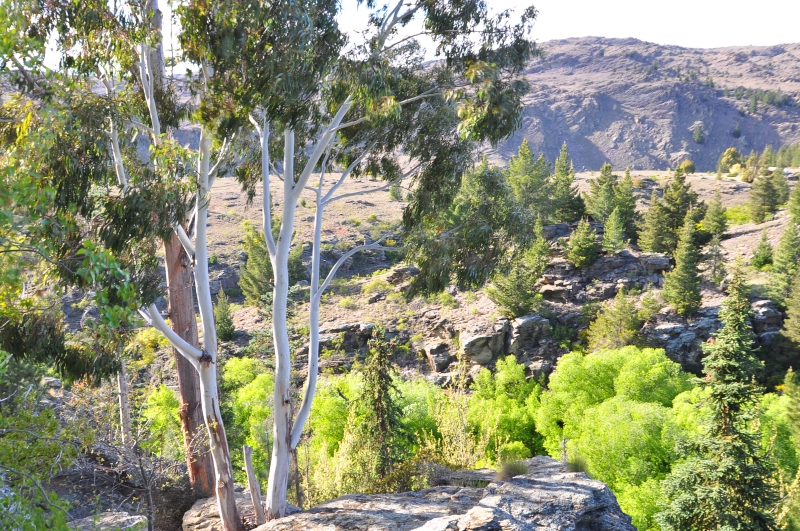
I am reminded of Jolendale Park, a property near the town of Alexandra in Central Otago, one of the driest areas in New Zealand with average annual rainfall of just 300 mm (12 in). From around 1960 Jolyon and Enny Manning made their home there and developed what is now a mature, public access, semi-arid woodland reserve. They protected precious traces from the past: pockets of light soil, the rare native sedge Carex inopinata huddled along the drip lines of rocky outcrops with lichen and moss growing across the stone, ground-hugging woody shrubs, scabweed (Raoulia), and beautifully patterned skinks, birds, grasshoppers, crickets, butterflies, moths, and other tiny creatures. Like Jacky they chose not to install fences, in their case not even on the boundary. This was partly for easy public access, but also from Enny’s personal conviction: as a child of a Dutch family Enny lived for several years behind barbed wire in a Japanese prisoner-of-war camp, so there were to be no barriers here.
A New House
In 1963 Jacky mapped out the central part of her new property and prepared plans for a stone house, designed by her friend Professor Jerzy Soltan, an American/Polish architect from Harvard’s Graduate School of Design. “They chose to build in stone, at a time when masonry skills had mostly disappeared in Greece with the predominance of reinforced concrete”. There was the added challenge of Jerzy not being able to visit the site during construction. Apparently the stonemasons unexpectedly added a minor extension plus other small changes to the original plans, but this does not detract from the overall effect. It is also perhaps an appropriate in-house example of the organic growth of buildings theorized in some depth by Jacky’s architectural colleagues!
Jacky took a leave of absence from Harvard’s 1964 academic year to supervise the process and was able to move in during the summer of 1965 – a huge achievement for both Jacky and her contractors to have such a complex and substantial building weathertight and move-in ready in just over 12 months. Crisp black and white contemporary photographs of the exterior and interior of the newly finished house and garden walls can be accessed on the MGS website here; they also show the rocky site and mostly treeless local hillsides.
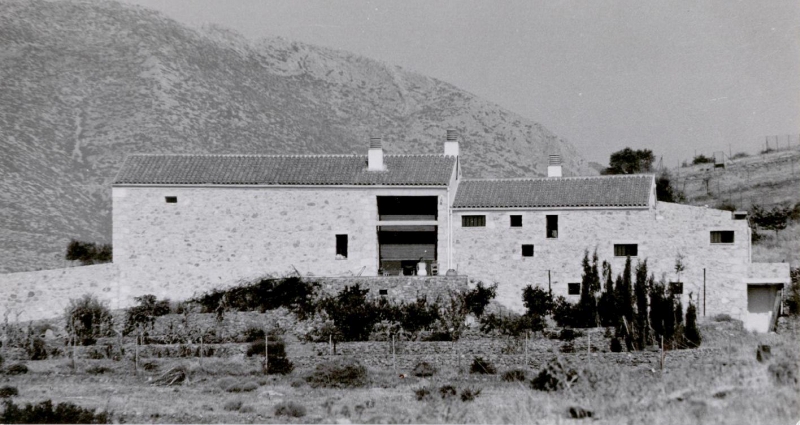
With the depth of mid-20th century architectural DNA coiled up in the provenance of this building, you’d expect something special; and it certainly is, without being overly slick or clever. It’s clearly a private home, in a modernist style with all the confidence of the times while still being ‘of the Mediterranean’, using elements such as a pitched clay-tile roof and a generous open-to-the-sky patio at the north end of the house. A long two-part rectangular block stretching grandly across the slope of the hillside along a north/south axis, the house takes full advantage of the site and is end-on to the hottest sun, the southern aspect in the northern hemisphere. Fundamental principles of modernist architecture are clearly expressed: austerity, asymmetry, and the conception of the building as a contrasting element in the landscape. It has a promethean quality, particularly in the modernist approach characteristic of Le Corbusier: “providing the visitor [with] a different perception of the building from any angle he/she sees it, while maintaining harmony, dynamism and coherence”. Sally Razelou describes this quality: “You drop down to the house as you approach it on the west side, and it looks like a long, low cottage, cloaked in greenery on either side of the front door: it nestles, it’s cosy. On the east side the house is two-storied, mammoth, austere, with the three long terraces stepped below it. The pathway below the house on the east side above the first terrace provides the only axis in the garden.” (Tyrwhitt)
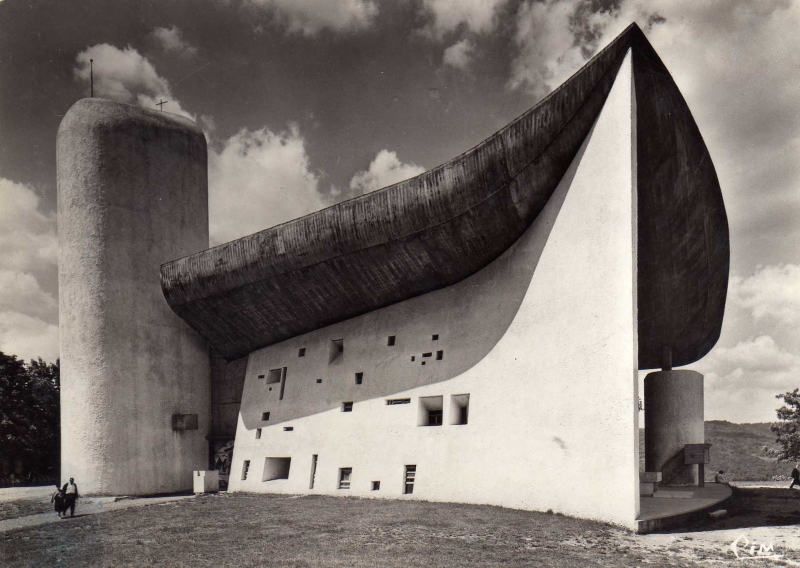
Compare the apparently randomly placed windows in the south façade of Le Corbusier’s chapel of Notre-du-Haut, Ronchamp with the similar carefully randomized pattern of differently sized windows on the east and west walls at Sparoza; and similarly, the deep window embrasures widening into the chapel, and the house, through thick masonry. The broad covered terrace at the south end of the house is supported by a monumental and elegant concrete brise-soleil structure for summer shade (literally ‘breaking the sun’), in the shape of the double-armed Lorraine Cross, a symbol in use since the 12th century. Timber clad ceilings and what appear to be steel ‘mid-century modern’ Crittall door and window frames complete the picture.
The Garden in Context
Jacky was a professionally trained horticulturist and garden designer. She had grown up in England among beautiful family gardens with a rich gardening tradition, including the Arts and Crafts legacy of Gertrude Jekyll and architect Edwin Lutyens. She also knew of notable Mediterranean gardens created by English and American expatriates all along the coastlines of Italy and France, such as La Mortola in Liguria, Villa Boccanegra nearby, and Lawrence Johnston’s Serre de la Madone near Menton. Most of Jacky’s summers had been spent in Greece for the previous ten years, and she was building a comprehensive knowledge of the native Greek flora, as well as connections with eminent botanists and authors such as Oleg Polunin, whose books Flowers of Europe (1969) and Flowers of Greece and the Balkans (1980) were her primary guides.
Greece and the Aegean islands are a botanical hot spot, with over 5,800 native species of vascular plants. Jacky had originally planned to be quite purist and grow only native plants, but then realized that “this would mean having a barren hillside almost all the summer … This meant that, at least around the house, I had to grow plants from other parts of the world that would thrive in a mediterranean climate – in other words a climate that has roughly five summer months with hot sunshine, and often strong winds and no rain; three winter months with a good deal of rain and night temperatures that may fall below 0°C (32°F); and the intervening four months March and April, and October and November, which are reasonably temperate. It is during these spring and autumn months that over threequarters of the Greek flora is in bloom”. (Tyrwhitt) The Sparoza area typically receives an annual average rainfall of around 400 mm (16 inches), spread unequally through the year.
Jacky also noted that “the line between native and introduced plants is not very definite. A lot depends on what date you draw the line at. Many of the most well-established and characteristic members of the Greek flora were introduced at some time in the past”. Sparoza has a strongly alkaline soil and low humidity in the summer, and so Jacky was firm in ruling out rhododendrons and camellias, along with much of the flora of China, Japan, North and South America (with the exceptions of California and Mexico), New Zealand, and Australia (again with exceptions such as specific hebes and eucalypts). However she was quite willing to learn through trial and error. This was in many ways an experimental garden, and it still operates under that philosophy.
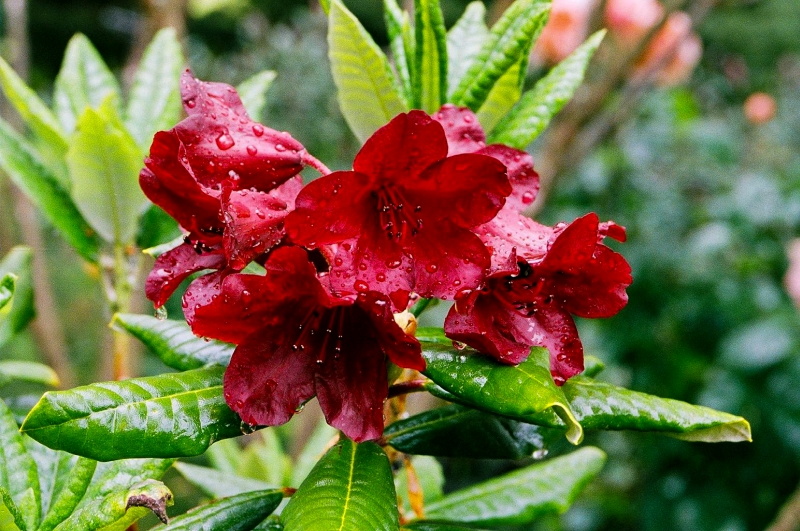
As I noted in Rhododendrons for a Changing Climate (Rhododendron Species 2021) there are some extraordinarily tough Rhododendron species in subsection Pontica, including R. ponticum and R. caucasicum, which are native to the Balkans. Certain species and hybrids cope well with dry soils, low humidity and summer heat on the dry Port Hills near Christchurch, and some are adapted to alkaline soils, for example the blackish-red Rhododendron sanguineum ssp. Didymium and its hybrid ‘Impi’, which do very well here. It would be interesting to try this genus at Sparoza, especially now that mature trees are providing more shade and humidity.
Sparoza is one of the earliest naturalistic mediterranean gardens in Greece and is part of an honourable tradition which continues to develop. Many people worldwide have chosen to garden in harmony with the local environment and use the native plants of their area. Mediterranean-style gardens have been planted after travels to the area, or because people love the distinctive colours and aromatic foliage of Mediterranean plants, and/or because their soil conditions demand it. Sparoza is exceptional: Jacky “pioneered in Greece the use of drought-tolerant plants from mediterranean-climate regions as well as the inclusion in the garden of indigenous wild plants”. Her leadership, philosophical background, intellectual gifts, and professional training meant that the house, the garden’s structure and planting, and the surrounding landscape could be confidently integrated into a harmonious whole. The remarkable stewardship of Sally Razelou over 30 years until 2021 further expanded and developed the garden in this spirit.
Here are some other examples of Mediterranean gardens, including one very close to Sparoza in space and time.
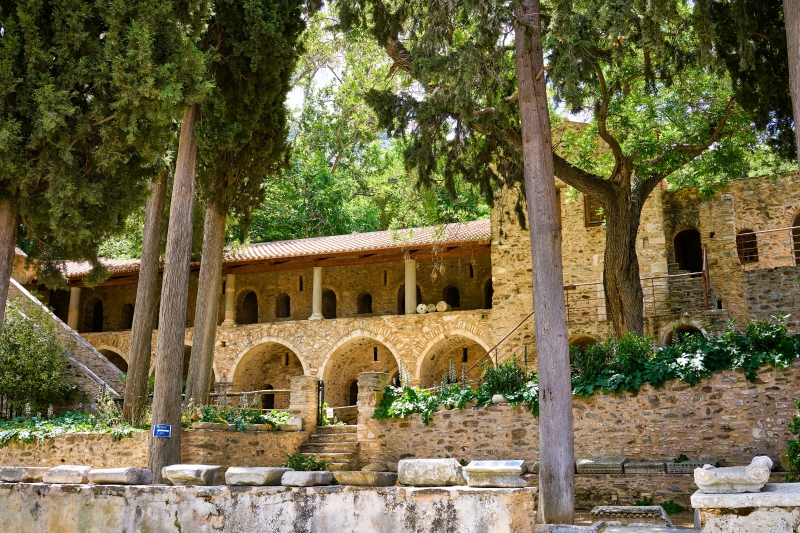
During her original search for land, Jacky visited the 11th century Eastern Orthodox/Byzantine monastery of Kaisariani high on the western slopes of Mt. Hymettus. It was from above the monastery she first saw the Sparoza area far below, and the landscape and plantings around the monastery may well have been of some inspiration to her for the garden. During wartime occupation, most of the forest surrounding the monastery had been cut down for fuel, and quarries had been blasted into the hills. After 1947, 607 hectares (1,500 acres) were ceded to the Friends of the Trees Society of Athens (FTSA), who gradually filled in the quarries and restored the landscape by planting a total of over two million trees, with further annual plantings of olives, shrubs, and herbaceous plants to beautify the site. The monastery was also restored, and in 1964 (at the time Jacky’s house was under construction) a botanic garden was created with a focus on native plants. It was dedicated to the memory of Kaity Argyropoulou, who as president of the FTSA was the driving force behind the reforestation. The 0.8-hectare (2-acre) botanic garden has continued to be enriched with new plantings (there were around 560 species in 2014) and is intended to promote, propagate, and re-establish a range of Greek flora.
In 1960 Beth Chatto began exploring planting possibilities in an area of almost pure sand and gravel at her home in Essex, “a corner of south-east England – that has the lowest rainfall in Great Britain – an average of 500 mm (20 inches) in a year, falling equally between winter and summer”. She knew that the area had perfect drainage and became extremely dry and hot in summer, and soon discovered the Mediterranean palette of plants, including Euphorbia, Eryngium, Acanthus, and the spectacular golden-flowered Mt. Etna broom, Genista aetnensis. This area became one of the garden’s most sophisticated and well-known areas. “Hence my two names for this part of the garden – the Dry Garden because of the basic conditions and the Mediterranean Garden because many of the plants I have chosen come from countries in that region.” She memorably describes an area of broad perennial planting as “reminiscent of pointilliste paintings; most of the flowers appear as small vivid dots of colour against a background of predominantly grey foliage”. (Chatto)
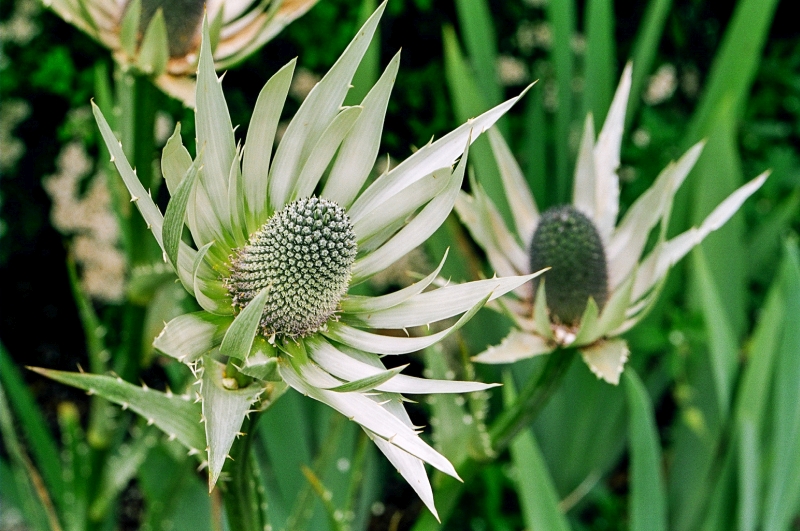
This is reminiscent of the comment and accompanying photographs by Sparoza’s former head gardener Lucinda Willan in October 2021 about “delicate and ephemeral annual flowers … from March into April the floor of the phrygana in the garden was covered with a carpet of exquisite wildflowers, Silene colorata, Nigella damascena, Papaver rhoeas, Anthemis chia and many vetches, as if Botticelli’s Primavera had come to life”. Phrygana is a natural Mediterranean plant community in which dwarf, cushion-shaped, spiny, aromatic, and often grey–leafed shrubs predominate.
Created in the decade after 1986, Nicole de Vésian’s garden La Louve in Bonnieux, Provence, France, covers less than 500 sq. meters (0.05 hectares) and has continued to be manicured and trimmed to perfection by its current owner. Nicole was a Hermès textile designer from Paris, and the garden’s style reflects her sense of neatness and order, with a definite Japanese influence. Colours are almost entirely in shades of green and silver (this is also true of Sparoza when in full summer dormancy) with relatively few significant seasonal changes. It is a garden at first glance quite unlike Sparoza where the rich and abundant planting combinations are full of seasonal colour and scent, and the woody shrubs and trees are carefully managed to accentuate their natural form and texture. However there are basic underlying principles between the two gardens. Nicole’s choice of plants is a carefully considered response to the mediterranean environment, and they are almost entirely from the local area, including Cistus, Cupressus, Teucrium, and Euphorbia for example, so the garden is drought tolerant and resilient. The same kind of natural stone and local plants used “all over the property creates a holistic connection between the house, garden and surrounding landscape…” There is virtually no symmetry, and the garden gradually becomes less structured and controlled as it recedes from the house, so that it “eventually melts into the landscape”. Similarly, at Sparoza “the garden blends by degrees into the natural vegetation of the hillside. This characteristic naturally imposes its own discipline: sensitive handling is required to avoid any jarring demarcation between the parts of the garden that are ‘gardened’ and the parts that are wild.”
Vita Sackville-West and Harold Nicholson were inspired to create a mediterranean garden at Sissinghurst in 1935, soon after they returned from a visit to the Mediterranean and specifically the Greek island of Delos. Natural stone, architectural fragments and careful planting made a beautiful effect, but the Kent climate, heavy soil and their unfamiliarity with mediterranean plants meant that the area they called ‘Delos’ never quite reached its potential in their lifetime. Recently the landscape designer and plantsman Dan Pearson was asked to remake the garden “to more truly reflect their dreams”. The process required a change in the original layout of raised beds to better align the garden for maximum sun and warmth, a new free-draining soil mix, and “planting inappropriate to the mood here was removed and replaced with plants that are primarily of Greek origin, augmented with others from the wider Mediterranean Basin”. Work finished in spring 2020 and is recorded in a series of photographs on the studio’s website, also in a webinar with the MGS recorded by Dan Pearson in 2022. The results are truly beautiful and would surely have delighted Vita and Harold – and Jacky, if she were able to see many of the plants she loved so sensitively placed and thriving in an English garden.
As we have seen, the garden at Villa Boccanegra near Ventimiglia in Italy was created from 1905-1923 for Miss Ellen Willmott, one of Jacky’s early teachers. Owned and cherished by a succession of good gardeners, it is a lush and remarkable survivor which retains many of its original plantings. The most recent guardian is dedicated plantswoman Ursula Piacenza, who “works in it every day in the right kind of trousers”, and her extended family. (The property is close to another famous Mediterranean garden La Mortola, which Jacky mentioned in her book.) English writer Robin Lane Fox described in 2017 how Boccanegra “slopes steeply down a dry hillside to the rocks and sea below… Up some big cypresses, Willmott planted a scrambling rose, ‘La Follette’, which has now run to a great height and flowers fully in spring. In Britain it is not hardy, but its pale pink-white double flowers are so prolific and so delicately shaped that I wish it was. Also known as Rosa ‘Sénateur La Follette’, this rose was a new variety soon after Willmott bought Boccanegra.
It is awesome to think she planted it as the latest thing on the market about 100 years ago. She also planted single-flowered white Rosa laevigata and bushes of the single deep red Rosa ‘Bengal Crimson’. All are still visible at Boccanegra and as they are available in the trade, Mediterranean gardeners should still plant them.
“In her choices and her wish to settle here Willmott was influenced by the nearby Hanbury [English family] garden at La Mortola… but I think it was Willmott’s Essex eye which led her to thorny Crataegus trees, surviving to this day, while her knowledge accounts for choices such as Cretan scabious Scabiosa cretica or small-leaved Pteronia incana… which was lost at La Mortola and then reintroduced from Boccanegra.
“I stopped beneath big trees of Arbutus andrachnoides with finely peeling bark and marvelled that she herself had planted them. I was even more amazed by her box trees, Buxus balearicus, which are very slow-growing. After about 90 years they are now tall trees. There is no natural water at Boccanegra except in one riverbed, which descends down a cleft at the far side of the garden. This stream, the rio secco, soon dries out in summer. From now on, weeding more or less stops. The paths are left with natural coverings of pine needles and the mood is close to nature, global though the planting is.”

Establishing the Garden at Sparoza
Jacky started her garden as soon as the house was liveable, in the summer of 1965. Directly below the long east side of the house and parallel to it, London-based landscape architect Marina Adams designed the core of the garden: three long stone terraces crossed by two flights of stone steps leading down to the access road. In her mid-20s, this was her first major commission. She later became known for her use of clear sculptural forms, preferring plants native to an area, and respecting the dynamics of existing landscapes. The terraces have a narrow pathway along their tops, and curve gently back towards the house at each end. Including the space between the lowest terrace and the road there are 12 garden beds, divided by the flights of steps. Backfilled with soil excavated from a pool north-east of the house, these were some of the first parts of the garden to be completed. They contain many of the original trees Jacky planted herself now grown to maturity, including pomegranates, a Seville or bitter orange Citrus x aurantium, and stone pine Pinus pinea. Three groups of cypresses were planted at the north end of the terraces, to shelter the area from prevailing winds.
The pool to the north-east, lined with concrete and faced with stone “was in two parts. The upper pond collects the run-off and houses red carp to eat mosquito larvae [Kaisariani botanic garden surrounding the monastery also has a fishpond], frogs (actually green toads), turtles, waterlilies, and masses of insect life which feeds the swallows in the summer; and the lower pond is a swimming pool which is drained every spring and filled with fresh water”. (Tyrwhitt)
A semi-circular stone wall was built to enclose a courtyard at the south end of the house, which could only be accessed down stone steps from the covered terrace. Tree planting was a priority, using mainly natives: Ceratonia siliqua carob, cypress, Cercis, pomegranate, pines, junipers and also Jacaranda, Thuja, Ailanthus and Ulmus parvifolia Chinese elm.
Jacky’s close friend John Papaioannou, who had first negotiated for the property, “supervised the planting of 300 trees … frequently using dynamite to open up holes”. (Razelou) Scarcity of water continued to be the main limitation for Jacky in establishing and developing the garden. There was enough from the well to supply the house, but any extra had to be brought in by expensive tanker – the Athens mains water supply was not connected until 1985. Physical help in the garden was also an issue. At first Jacky employed a series of retired workmen who lived on site, but they could not always manage the heaviest tasks, and they prioritized the fruit trees and vegetables rather than the ornamental gardens when she was away. “Most rural Greeks are knowledgeable and skilled agriculturists and probably it is only a matter of time for them to become horticulturists. A few more years of relative prosperity and leisure may see many changes.” (Tyrwhitt)
It was not until 1975 that she advertised with the Royal Horticultural Society for a horticulturist who could live on site for a year, help with the garden and learn about the Greek flora. This system worked well, and she had a series of younger gardeners come to Sparoza. In her later years they were chosen from graduates of the Royal Edinburgh Botanical Gardens.

When American author Frances Mayes settled in Italy in the 1990s she found the local workmen had a similar attitude. They cared expertly for fruit trees (including citrus), grapes and olives, edible plants such as wild greens and asparagus used for bitter salads, and were happy to plant shelter trees such as cypresses, but had little or no interest in flowers or ornamental garden beds with lavenders, roses, and hydrangeas. Flowers were a relatively minor element in classical and Renaissance Italian gardens, and English gardener Monty Don commented in 2011 that “Italian garden historians and conservationists [and landscape designers] are as good as any in the world… [however] the popular culture of gardening has almost disappeared from modern Italy. Head gardeners are highly unlikely to be Italian…” and far more likely to be from Britain or her former colonies. He suggested social and economic trends since World War II as a cause, and perhaps a similar situation persisted in Greece. The wealth of knowledge and hand-on experience built up over nearly six decades at Sparoza, which continues to be shared with students, gardeners and landscape designers from Greece and other countries, will surely be making a difference.
By 1983, steady growth of the garden had dramatically improved the environment around the house, both visually and in terms of shade, shelter, and soil protection. Jacky had continued to teach until 1972 and remained consultant editor of Ekistics. “There was a constant stream of visitors to Sparoza of family, friends, students and colleagues from all over the world. She was a charming hostess – all her visitors went away feeling that they had had a special experience. Apart from her intellectual gifts, she was a very perceptive critic of all the visual arts and of music. She was deeply interested in her students, thoughtful of their welfare, warm-hearted and motherly. She [was] remembered by all sorts of people in the [nearby] village of Peania with admiration and affection, curiously as the Amerikanídha.” (Razelou)
After her death the house and garden were bequeathed in perpetuity to the Goulandris Museum of Natural History as she wished, with provisions for access by friends and family, and others too, including the Hellenic Association for Contemporary Music for concerts, meetings, and accommodation.
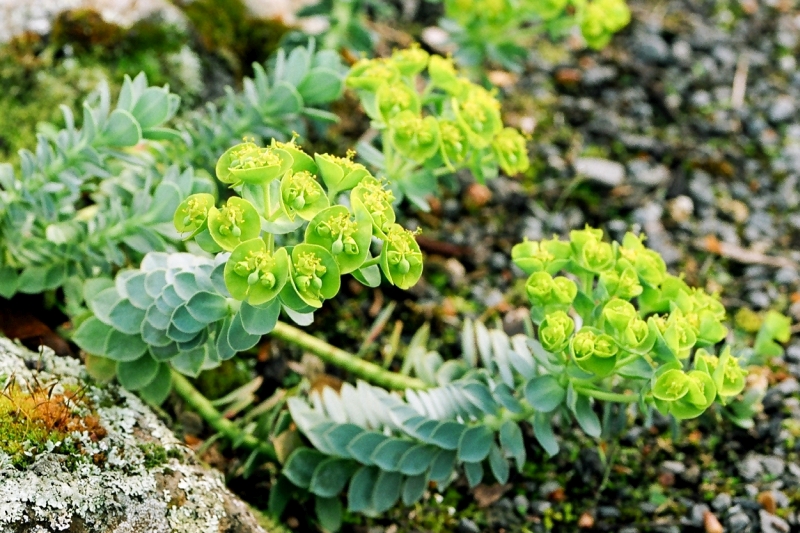
Renaissance
Without Jacky’s guiding hand the property went into decline for a short period, until longterm tenants John and Jay Rendall, associates of the museum, came to live at Sparoza for nearly ten years while their own house in the Peloponnese was being prepared. The Rendalls maintained the house and carefully restored and enriched the garden, adding a number of significant plants including a Wisteria sinensis near the south terrace. By 2012 this had clothed the concrete brise-soleil, making a spectacular flowering display in spring, and providing valuable shade in the summer.
The Rendalls’ own house was finished in 1992, and happily another experienced and knowledgeable gardener came to live at Sparoza in June that year: new guardian Sally Razelou. The next three decades seem to have been something of a rebirth and a golden age for the garden (Sally died in 2021), as she steadily and quietly developed the layout and fresh plantings to be climate-compatible and even more beautiful. In co-ordination with the Mediterranean Garden Society (MGS) she welcomed what must have been hundreds of people from all over the world to work with her in the garden.
Sally’s mother and father were from Kansas and Ireland respectively, and after receiving a degree in History and Political Science from Trinity College Dublin in 1954, she spent the first part of her gardening life restoring a large property in Ireland. She and her first husband Peter bought a house on the Greek island of Syros in 1971, which introduced her to the mediterranean flora. She settled in Greece with her second husband Nikos, and it was five years after his death in 1987 that she came to live at Sparoza. Her description of the first year in the garden is characteristic of her approach: “The first year of my tenancy of Sparoza was dedicated to the maintenance of the garden and to the observation of the plants that existed, especially the bulbous flora in their seasons. My understanding of the climatic conditions, the water needs of the plants, the local landscape and the microclimates contained in it came gradually, and indeed can never be said to be complete. Each week some new species would come into flower. Great care was taken not to dig any piece of ground in case it contained a hidden treasure.” Many of Sally’s own writings can be found on the MGS website, along with friends’ warm descriptions and photographs of her and the garden.
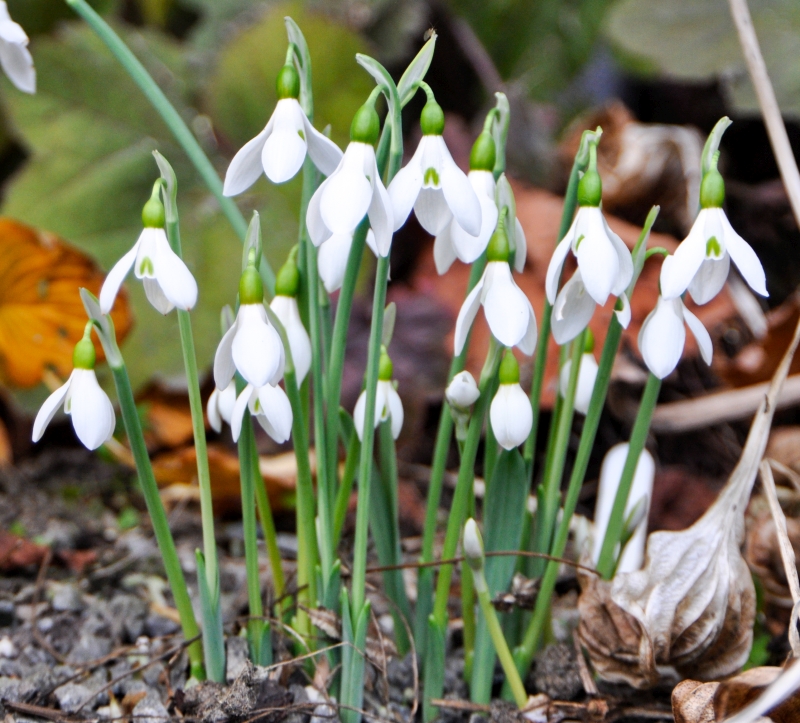
Mediterranean Garden Society and a Changing of the Guard
Sparoza was a catalyst for the formation of the MGS in 1994. In the early 1990s it was still difficult to access information about how to garden in a mediterranean climate, and over several years a small group of gardeners in Greece hatched the idea of a network of gardeners who could share knowledge and experiences. After a first visit to Sally at Sparoza in 1994 and subsequent meetings, the idea gathered momentum, and with further publicity and promotion the Society was successfully launched in December 1994. Sparoza was a natural home for the Society, and in 1999 it was formally designated the MGS garden at Sparoza. A detailed account of the MGS and its many activities can be found on the MGS website, which will give a fuller picture than space allows here.
A major tree planting programme on the hillside north of the house was completed in 2002 to provide more shelter from the prevailing northerly winds, which can reach gale force in summer: a hundred cypresses, plus a number of pepper trees Schinus molle and acacias. “One of the organic substances used to enrich the soil has been tsipouro, the pips and residue left after the grapes have been pressed for wine … [and] copious amounts of crushed cocoa-bean shells have been dug in, acquired from a local chocolate factory. Pioneer plant species are sometimes used to improve the ground so that, in due course, other more demanding plants may be planted in their place.”It is difficult to paint a word picture of such a multilayered, colourful and scented garden, and the many photographs here on the MGS website display the garden far more effectively.
Perhaps a snapshot of a relatively small part of the garden is a good way to give a sense of the whole: in this case the original terraces below the house now sheltered by mature cypresses and pines. Even by the standards of the rest of the garden this is a richly planted area and full of seasonal colour: yellows, purples, blues, pinks, whites, and reds. Scent is also a feature with oranges, freesias, jacaranda, roses, bearded iris, rosemary and Buddleja; and a high proportion of the foliage is intensely aromatic. Mature trees make some spots cool and shady, while other patches are still in full sun, providing a mosaic of different conditions for complex layering: trees, flowering shrubs, herbaceous perennials, and an extraordinary variety of bulbs. The stone retaining walls provide comfortable places to sit, and the area has a pleasant rambling quality.

Pruning and shaping of woody plants in the more intensive parts of the garden closer to the house appears to be of a very high standard. Natural forms and textures of bark, trunks and foliage are enhanced, while a valuable lightness and transparency is maintained across the garden. This is a notoriously difficult balance to achieve – art appearing to be artless – and relies on intensely personal care, and deep knowledge. Lucinda Willan, formerly head gardener at Sparoza, is an excellent photographer, as can be seen here on the MGS website. She writes with insight and sensitivity about coming to the garden and meeting Sally Razelou for the first time in 2020: “The garden that Sally created has been a complete revelation to me. It is a garden that gets under your skin. I think this is why almost every gardener who has spent time at Sparoza has fallen in love with it and why sometimes a visitor who walks around for half an hour doesn’t get it. It reveals its secrets slowly and rewards close observation. I love its informality and the way that the wildflowers of Attica take centre stage throughout most of the season. The structure of the garden is given by the native and non-native trees and shrubs arranged around the four-acre site in different themes, but the magic comes from the succession of native geophytes and annuals that come in successive waves from the first autumn rains until the searing heat dulls the yellow sea of Bupleurum flavum and turns everything quiet.” Lucinda articulates a fine balance of head, heart and hands which can only be good for the garden.
Sparoza and Canterbury
The climate of the east coast of New Zealand’s South Island Te Waipounamu is a different creature from Attica of course, but there are similarities which allow a wide range of mediterranean (and mediterranean-compatible) plants to thrive here, particularly so on the warm hillslopes south of the city. Christchurch has a winter-maximum rainfall with annual average 650 mm (25 inches), and prolonged summer droughts. Due to the rainshadow of the Southern Alps, we too have a hot dry nor’westerly wind that can blow for days, and the Canterbury plains comprise mostly free-draining soils. Temperatures typically fall between -5°C (23°F) to 32°C (89°F) but can reach as high as 37°C (98°F). In the 1980s significant snowfall in the city was relatively common, (more so on the hills and Banks Peninsula), and a -9°C (15°F) frost not unheard of. But this is no longer the case as the long-term baseline temperature has risen. City suburbs such as Cashmere and Redcliffs on the northwest-facing slopes of the dry Port Hills still receive some snow, but only light frosts. They rest on volcanic basalt with layers of consolidated loess topsoil which bakes hard in the summer, (northwest is our hottest aspect in the southern hemisphere). The soil is fertile, and has a moderate to slightly acid pH, but needs initial deep cultivation and plenty of grit and organic matter if it is to drain well.
Here is a snapshot of mediterranean-compatible plants which we are familiar with in Canterbury, in no particular order, and which have been proven to be particularly drought tolerant: The Pepper tree Schinus molle grows well on the hills, along with cypresses, stone pines, olives (‘El Greco’ is a particularly good bushy ornamental form), many kinds of Eucalyptus (including the spectacular scarlet-flowered E. ficifolia), pomegranates, figs, sweet chestnut Castanea sativa, fastigate oaks Quercus robur ‘Fastigiata Koster’ and Q. ilex, native kanuka Kunzea ericoides, Juniperus (and particularly J. chinensis ‘Kaizuka’), quince, Persian ironwood Parrotia persica, almonds, damson plum Prunus domestica ssp. insititia, Chinese elm Ulmus parvifolia, bay Laurus nobilis and Portuguese laurel Prunus lusitanica (these last two need regular spraying here in early summer with Conqueror oil and copper to prevent infestations of thrip), silver pear Pyrus salicifolia ‘Pendula’, Michelia yunnanensis ‘Gracipes’, bitter/Seville orange Citrus aurantium, and Feijoa sellowiana cultivars including ‘White Goose’, ‘Golden Goose’ and ‘Sherbet’.
Successful woody shrubs and climbers include:
Philadelphus ‘Sybille’ (Purpureomaculatus Group), and Wintersweet Chimonanthus praecox (both of which are good on chalk), Daphne x Burkwoodii ‘Somerset’, lilac, Rosa glauca, the New Zealand natives Muehlenbeckia astonii and Olearia fragrantissima, Viburnum tinus ‘Lucidum’, Wisteria, star jasmine Trachelospermum jasminoides (used extensively, and also very effective as a groundcover), Viburnum propinqum and Sarcococca confusa for dry shade, rhododendrons R. maddenii and ‘Impi; rosemary, Bupleurum fruticosum, Grevillea lanigera ‘Mt Tamboritha’, Raphiolepsis umbellata and Echium.
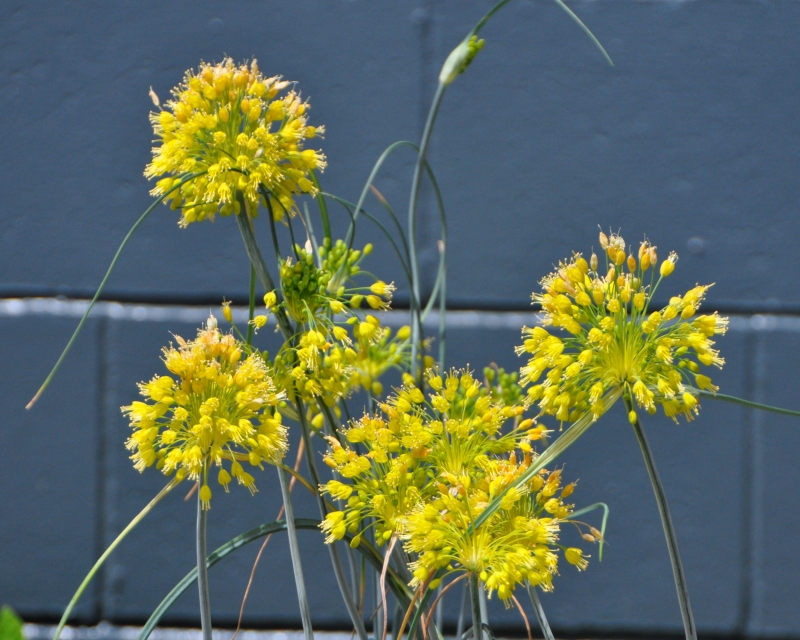
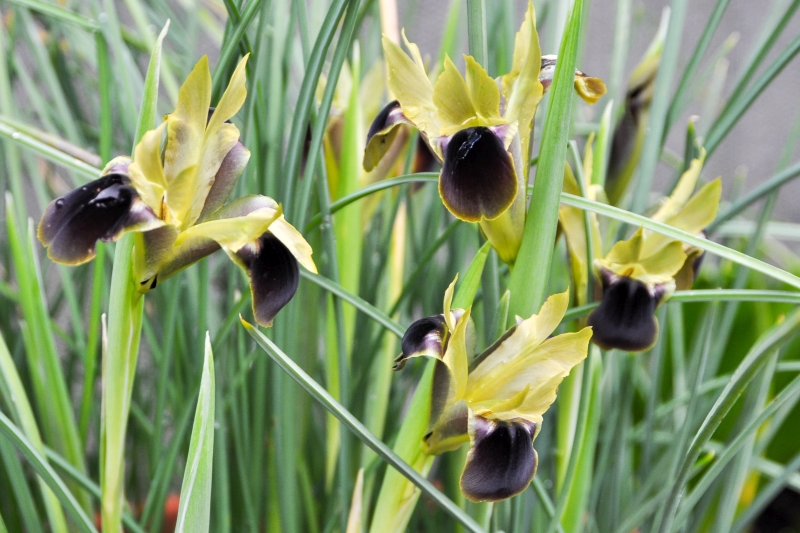
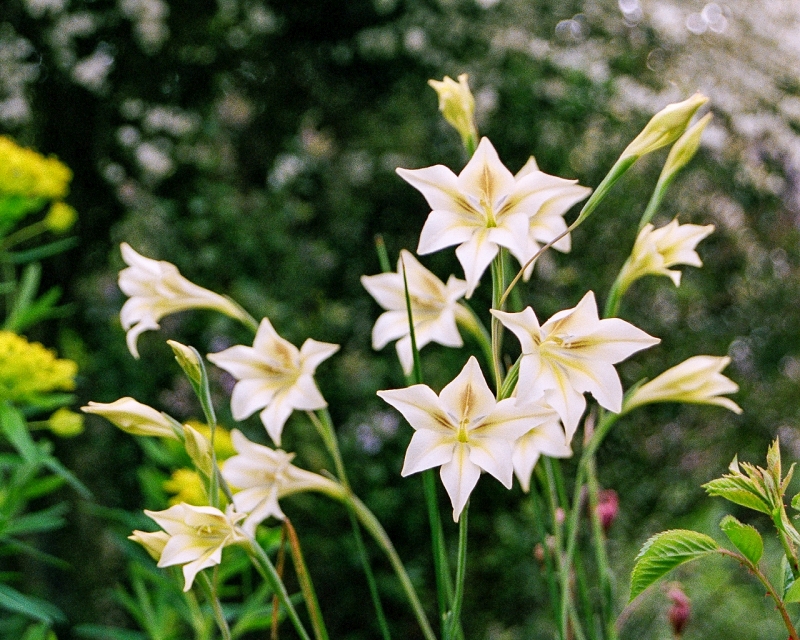
Woody herbs, herbaceous perennials, annuals, and bulbs include Oenothera lindheimeri (syn. Gaura lindheimeri), false indigo Baptisia australis, Eryngium agavifolium, Agapanthus inapertus, bearded iris; Iris unguicularis, Galanthus, Teucrium chamaedrys, lavender, nerines, Thymus, Iris tuberosa (syn. Hermodactylus tuberosus), spring starflower Ipheion uniflorum, Anthyllus, Allium flavum, Gladiolus tristis, Cerinthe major, Acanthus, Salvia chamaedryoides, Phlomis and Euphorbia myrsinites.
Conclusion
The house, garden, and extended landscape at Sparoza as they are now are the happy result of nearly 60 years of vison, inspiration, and hard work on what was a particularly uncompromising site. The garden has also enjoyed a valuable continuity over a long period, holding the sustained focus of a group of relatively few but very talented practical gardeners of like mind – a vital source of the garden’s unique personality and atmosphere.
It is an inspiration, particularly to the Mediterranean gardening community and landscape architects in Greece, as well as much further afield thanks to the generosity of the Goulandris
Museum of Natural History and the Mediterranean Garden Society. Sparoza is like a living salon, in the classical sense of a gathering to increase and share information that can both please and educate – a role which has now been extended dramatically by the internet.
Jacky Tyrwhitt seems to have anticipated something of this for Sparoza, which (from a tribute by Ray Alexander, her second gardener) “she envisioned extending into perpetuity; her sharing of this happy place with future generations. Though deprived as they are of the joy of knowing her and feeling the added dimensions her presence gave to the place, they who will pass unknowingly the sleeping mandrake root will nevertheless, thanks to her vision, thoughtfulness, and love, be able to walk through those timeless fields of asphodel and enjoy the peace and beauty she brought to the ‘Hill of Sparrows’”. (Razelou) It’s also good to remember that with all its deep provenance Sparoza is still simply a beautiful garden – to be experienced in the present moment and treasured for its own sake.
Martin Wilkie is a landscape architect and horticulturist living in Christchurch, on the east coast of New Zealand's South Island. Self-employed, he also contributes articles and photographs to local and international publications; subjects include landscape history, art and garden design, biography, dendrolgy (particularly the genus Rhododendron), climate, and the natural environment.
References and Recommended Reading:
Chatto, B. 1989 The Green Tapestry – Perennial Plants for the Garden The Dry Garden, pp 128 – 149 Collins
Don, M. and Moore, D. 2011 Great Gardens of Italy pp 6 – 9 Quadrille Publishing
Mayes, F. 1996 Under the Tuscan Sun. p 2 Broadway Books
Mayes, F. 1999 Bella Tuscany – the Sweet Life in Italy p 6 – 9, 124 – 126 Anchor, Random House.
Filippi, O. 2016. Planting Design for Dry Gardens. Filbert Press.
Razelou, S. 1998. Preface to Making a Garden on a Greek Hillside. pp. viii, ix, xi, xiv, xii, xv
Tyrwhitt, M. J. 1998. Making a Garden on a Greek Hillside. Denise Harvey (Publ.), Greece. pp 1, 2, 3, 7, 225
THE MEDITERRANEAN GARDEN is the registered trademark of The Mediterranean Garden Society in the European Union, Australia, and the United States of America